 How-to
How to Lead Your Own Construction Project Successfully
Last Updated: November 5, 2026
Quick Summary
Owner led construction matters because control and accountability sit in the same seat: the owner sets the vision, approves every dollar, and makes the calls when trade-offs arise. This direct involvement speeds decisions, strengthens project buy-in and alignment, and keeps risk and responsibility with the person paying for the work.
- Define vision, scope, and ranked priorities before you interview a single builder.
- Name one owner decision-maker and set a written date for every selection.
- Release draw payments only after inspecting work at each milestone.
- Fixed-price contracts cap your exposure and suit defined-scope luxury renovations.
- Confirm general liability, workers' comp, builder's risk, and umbrella coverage in writing.
Table of Contents
- Why Owner Led Construction Changes Project Outcomes
- Construction Project Owner Responsibilities From Day One
- Owner-Led Construction vs. Owner's Representative: Which Fits You
- Choosing a Project Delivery Method and Procurement Strategy
- Questions to Ask a Custom Home Builder Before You Sign
- How a Construction Payment Schedule Protects Your Money
- Risk Allocation, Contracts, and Insurance for Owner-Led Projects
- Book a Fixed-Price Consultation With an Owner-Led Builder
- Frequently Asked Questions
Why Owner Led Construction Changes Project Outcomes
Owner led construction is a delivery approach where the project owner holds direct control over decisions, budget, and the building team instead of handing that authority to a general contractor. For a deeper look, read the benefits of owner-led construction.
The core argument is simple: control and accountability should sit in the same seat. When the person paying for the work also directs the work, decisions get faster and excuses get thinner.
Here is what most guides get wrong. They treat owner led construction as a paperwork change. It is not.
The owner's role is crucial to project buy-in and alignment, according to MBP's analysis of owner involvement in project success.
Below, we break down the responsibilities, the delivery choices, and the contract terms that decide whether this model works for you.
Construction Project Owner Responsibilities From Day One
An owner's job starts before anyone breaks ground. You define what success looks like, then defend that definition for the life of the project. Skip this step and every later decision becomes a negotiation.
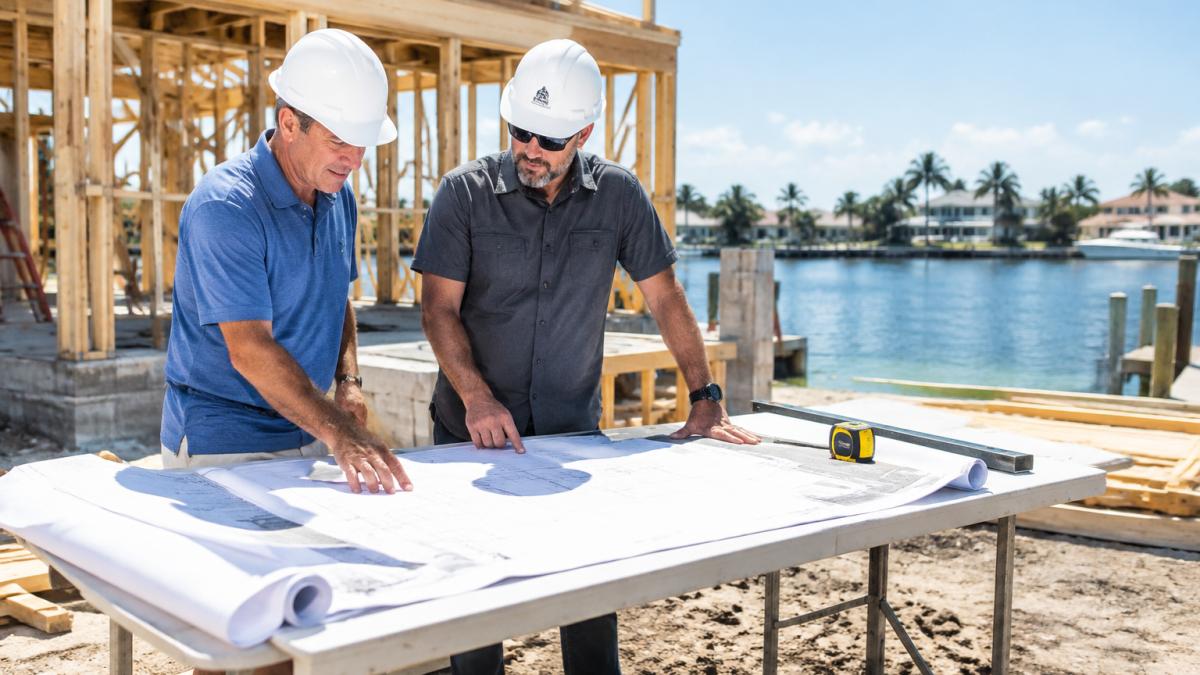
The clearest gap in most guides is sequence. They describe the owner's role as a list of duties rather than a workflow.
Phase 1: Define the Project Before You Talk to Builders
Write down three things before you interview a single builder:
- Vision: the finished home or space in plain language
- Scope: what is included, and just as important, what is not
- Priorities: rank cost, schedule, and finish quality in order
That ranking settles arguments later. When a tile upgrade pushes the budget, you already know whether to trade schedule or trim elsewhere.
Scope definition is where owners save the most money. Vague scope invites change orders, and change orders are where budgets die. Owners who leave finish schedules and fixture allowances undefined often face unexpected costs when selections are made under schedule pressure.
Phase 2: Assemble the Team and Set the Decision Structure
Before design begins, decide who has authority to approve what. Name a single owner decision-maker, even if a spouse or partner shares the investment. Contractors who receive conflicting instructions from two owners lose weeks to rework.
Set a decision calendar. Late selections, tile, plumbing fixtures, cabinetry, can cause schedule slip on residential projects. Give your builder a written date for each selection and hold yourself to it.
Phase 3: Design and Preconstruction
During design, your job is to keep the drawings aligned with the budget you set in Phase 1. Ask for a design that is priced as it develops, not one delivered whole and then value-engineered. Value engineering after design is complete is where scope quietly disappears.
Preconstruction is also when you confirm permits, HOA approvals, and utility coordination are moving. Owners who assume the builder is handling these discover gaps at the worst moment.
Phase 4: Construction Oversight
Once work starts, the owner's job shifts from defining to verifying. Walk the site at each payment milestone, compare completed work to the schedule, and release draws only when the work matches. Attend a short weekly coordination call so decisions do not queue up.
Watch out: an owner who disappears during construction and reappears at the final walkthrough may find that deferred decisions were made by someone else.
Phase 5: Closeout and Warranty
Closeout is not a formality. Collect lien waivers, as-built drawings, warranty documents, and inspection records before you release final payment and retainage. Schedule a punch-list walkthrough with the builder and put every item in writing with a completion date.
That sequence is the difference between an owner who leads and an owner who reacts. The rest of this guide covers the tools and terms that make each phase work.
Owner-Led Construction vs. Owner's Representative: Which Fits You
The difference comes down to who signs. An owner's representative is a hired professional who manages the project on your behalf. Owner led construction means you keep that authority yourself.
| Factor | Owner-Led | Owner's Representative |
|---|---|---|
| Final decision authority | You | The rep, within limits you set |
| Time commitment | High, near daily | Low to moderate |
| Cost | Lower fees, more of your hours | Professional fee, less of your time |
| Best for | Hands-on owners with flexible schedules | Absentee or out-of-state owners |
| Risk | Sits with you | Shared per contract terms |
Pick owner led construction if you have the time and appetite for detail. Pick a representative if you travel often or own from a distance.
A common mistake is hiring a representative and then second-guessing every call. That arrangement burns money and goodwill. Decide which seat you want, then stay in it.
Choosing a Project Delivery Method and Procurement Strategy
Your project delivery method decides who holds which risk before the first shovel moves. Three models cover most owner led work:
- Design-bid-build: you hire a designer, then bid the work to contractors. Most control, most coordination work.
- Design-build: one team handles design and construction. Fewer handoffs, less owner control over details.
- Construction management at risk: a manager joins early and guarantees a price. A middle path.
Your procurement strategy matters just as much. Fixed-price contracts cap your exposure. Cost-plus arrangements pay actual costs plus a fee, which suits projects with heavy unknowns.
For most luxury renovations with a defined scope, fixed price wins. It forces the builder to price honestly up front. If you are weighing the two, our comparison of fixed price vs cost plus remodeling walks through when each model protects the owner better.
Questions to Ask a Custom Home Builder Before You Sign
Ask these before money changes hands:
- Who is on site daily, and is that person your employee?
- What happens if the schedule slips, and are there penalties?
- How do you price changes, and who approves them?
- Can you show a fixed-price contract for a project this complex?
- How do you handle HOA approvals and inspections?
- What is your license number, and can I verify it?
That last one is not rude. It is basic diligence. Ask for the license number in writing and check it.
Watch out: a builder who dodges the schedule-penalty question is telling you something. Get the answer in the contract or walk.
At Accent Construction & Remodeling, we offer an on-time completion guarantee backed by self-imposed penalties.
How a Construction Payment Schedule Protects Your Money
A construction payment schedule ties each check to completed work. You pay for framing after framing is done, not before. That single structure protects more of your money than any other contract term.
A workable schedule looks like this:
- Deposit: small, tied to mobilization
- Draw payments: released at defined milestones, after your inspection
- Retainage: a holdback released at final walkthrough
- Change orders: paid only when signed and priced in advance
Never pay ahead of progress. If a builder asks for a large sum before work starts, ask why.
Progress monitoring is your job here. Walk the site at each milestone, compare it to the schedule, and release the draw only when the work matches.
Risk Allocation, Contracts, and Insurance for Owner-Led Projects
Risk allocation is the art of deciding who pays when something goes wrong, and it belongs in the contract, not in a handshake.
Owner led construction concentrates risk in the owner's seat. That is the trade-off for control. The practical response is to transfer specific risks to the parties best positioned to carry them, and to insure the risks you keep.
Contract Structures That Allocate Risk
A fixed-price contract transfers cost-overrun risk to the builder, but only for the scope defined in the drawings and specifications. Any gap in scope becomes a change order and the risk returns to you.
Cost-plus contracts keep cost risk with the owner but give you visibility into every dollar. Because a maximum price or open-book accounting can still leave room for disputes over scope and spending, independent project oversight can help keep cost-plus arrangements transparent and accountable.
Time-and-materials arrangements are the least protective for owners and should be reserved for small, well-defined repair work.
Insurance Every Owner Should Confirm
Before any trade starts work, confirm in writing that the following coverage is in place and that you are named as an additional insured where appropriate:
- General liability for the general contractor and each subcontractor
- Workers' compensation for every worker on site
- Builder's risk covering the structure during construction
- Umbrella or excess liability for larger projects
Owners should not assume the builder's insurance covers the owner's own exposure. Owner's liability coverage and, for occupied renovations, a rider on the homeowner's policy are separate conversations with your insurance agent.
Lien Waivers and Payment Protection
Mechanic's lien law varies by state, but unpaid subcontractors and suppliers may be able to file a lien against your property even if you paid the general contractor in full. Owners commonly request lien waivers tied to each payment. Consult a construction attorney in your state for the rules that apply.
Permits, Licensing, and Professional Advice
Confirm that the builder holds the license required for the work and that permits are pulled in the correct name.
This section is general information, not legal advice.
An empirical study of owner-contractor conflicts in large public projects, published in Buildings journal research on owner-contractor conflict, stresses proactive conflict management. The lesson travels to private work: name the conflicts early and in writing.
Before you sign, read our guide to penalty clauses for construction delays so you know what use looks like on paper.
Book a Fixed-Price Consultation With an Owner-Led Builder
Owner led construction rewards owners who show up prepared and punishes those who do not. The model works when you hold the decisions, the budget, and the schedule in one hand and demand clear terms from everyone else.
Founder John Pelland brings over 35 years of trade experience and stays directly involved on site.
If you are planning a custom home, review our custom homes built on your lot or start a conversation about your project.
Frequently Asked Questions
What is the role of the owner on a construction project?
The owner sets the vision, approves the scope, controls the budget, and makes final decisions. In owner led construction, you also choose the delivery method, hold the contracts, and monitor progress against milestones. That means approving change orders, reviewing submittals, and coordinating with your design team and contractor. The role is active, not ceremonial: owners who establish alignment early and keep scope realistic give their projects a stronger chance of finishing on budget and on schedule.
Should I pay a contractor 50% upfront?
A large upfront payment shifts risk onto you. A construction payment schedule tied to completed milestones, such as foundation, framing, and rough-in inspections, keeps money matched to verified work. Ask what each draw covers and request lien waivers from subcontractors before releasing funds.
How does owner-led construction differ from hiring an owner's representative?
An owner's representative is a hired agent who manages the project on your behalf, while owner led construction keeps decision-making with you. The representative brings technical oversight and daily coordination; you retain final authority either way. If you lack the time or construction knowledge to review submittals and monitor progress, a representative can fill that gap. If you want direct access to the builder and control over every approval, an owner-led model with a hands-on builder fits better.
What questions should I ask an owner-led construction company?
Ask who will be on site daily, how change orders are priced and approved, what happens if deadlines slip, and whether the contract is fixed-price. Request the license number, insurance certificates, and examples of similar projects. Ask how the builder coordinates with HOAs for condo and high-rise work, and what design planning is included before construction starts. Clear answers to these questions separate an engaged owner-builder from a name on a letterhead.