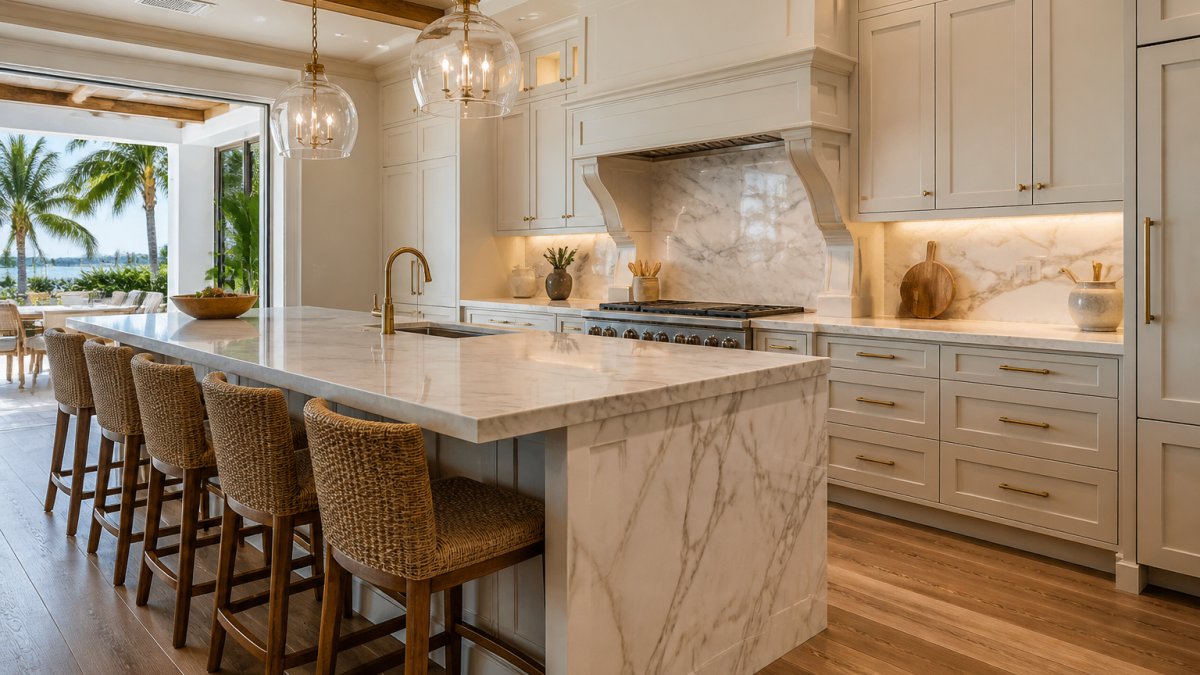
 comparison
Fixed Price vs Cost Plus Remodeling: 2026 Comparison
Table of Contents
- Fixed Price vs Cost Plus Remodeling: What Each Contract Means
- Side-by-Side Comparison: Budget, Risk, and Profit
- Cost-Plus Contract Disadvantages Homeowners Should Know
- Fixed Price vs Cost-Plus Contract Examples in Real Renovations
- Remodeling Contract Change Orders: How Each Model Handles Surprises
- Hybrid Models, Red Flags, and Dispute Resolution
- How to Choose: A Decision Framework for Your Project
- Frequently Asked Questions
Last Updated: October 5, 2026
Fixed Price vs Cost Plus Remodeling: What Each Contract Means
The fixed price vs cost plus remodeling decision shapes your budget, your risk, and how surprises get handled. At Accent Construction & Remodeling, we write fixed-price agreements for most projects under $1.5 million.
Fixed-price (lump sum) contracts state one total price for a defined scope.
Cost-plus remodeling contracts work differently. You pay the actual cost of materials and labor, plus a contractor markup covering overhead and profit, usually a fixed percentage of cost or a flat fee. Open-book accounting is standard, so you see every invoice.
The trade-off is simple: predictability versus flexibility. One protects your budget. The other protects the builder when the scope is genuinely unknown.
Side-by-Side Comparison: Budget, Risk, and Profit
The core difference in one line: fixed-price transfers cost risk to the contractor; cost-plus keeps it with you.

| Factor | Fixed-Price (Lump Sum) | Cost-Plus |
|---|---|---|
| Budget predictability | High, one locked total | Low, final cost varies |
| Who carries overrun risk | Contractor | Homeowner |
| Pricing basis | Predetermined project total | Actual cost plus fixed fee |
| Transparency | Summary pricing | Open-book accounting |
| Change orders | Priced individually as they arise | Absorbed into running cost |
| Best for | Defined scope, firm budget | Unknown or evolving scope |
How Profit Margins Differ
Profit works in opposite directions under each model. A fixed-price builder earns more by controlling costs below the contract total, which rewards efficiency. A cost-plus builder earns a set percentage of whatever the project costs, so the fee grows as costs grow, the incentive to shave costs is weaker. If you choose cost-plus, insist on open-book accounting and a capped fee.
Key Differences in Risk Allocation
Risk allocation is where these contracts diverge most. Site conditions, material fluctuations, and labor costs all land somewhere: under a lump sum agreement the contractor absorbs them, under cost-plus you do. A contingency fund of 10 to 15 percent of the project budget is standard either way, the question is whose money sits in that fund.
Cost-Plus Contract Disadvantages Homeowners Should Know
The clearest cost-plus contract disadvantage is that your final number is unknown until the last invoice clears, uncertainty that hits hardest on a residential renovation with a firm budget. What to watch:
- No ceiling unless you negotiate one. Without a guaranteed maximum price, costs can climb past your comfort zone before anyone flags it.
- Weaker cost-control incentive. A percentage-based fee rises with total cost, so the builder's motivation to trim expenses is softer.
- Budget creep is quiet. Small additions and upgrades feel painless one at a time and add up fast.
- Financing gets harder. Lenders prefer a defined number, and an open-ended total can complicate loan approval.
None of this makes cost-plus wrong, but never sign one without a cap, a fee ceiling, and regular cost reporting.
Fixed Price vs Cost-Plus Contract Examples in Real Renovations
Concrete scenarios make the choice clearer than any definition.
A defined kitchen renovation. The layout stays put, finishes are selected up front, and the scope is fully documented. A fixed-price contract fits because the variables are known, the homeowner gets one number and holds the builder to it.
A waterfront gut renovation with hidden conditions. Once walls open, structural and moisture issues surface that nobody could see. A cost-plus structure with a guaranteed maximum price protects both sides, because no honest builder can price unknowns with certainty.
The rule we follow: if the scope can be drawn and specified, fix the price. If it genuinely cannot, use cost-plus with a cap.
Remodeling Contract Change Orders: How Each Model Handles Surprises
Change orders are the single biggest source of remodeling disputes, and each model handles them differently.
The mechanics matter more than the label.
How fixed-price change orders are priced. The contractor typically applies the same markup structure used in the original bid, often a percentage for overhead and profit on top of material and labor cost.
How a guaranteed maximum price (GMP) changes the math. Under a GMP, change orders are the primary mechanism by which the ceiling moves.
A practical change-order protocol. Most disputes are procedural, not contractual. The fix is a written protocol signed at contract execution:
- Every change, regardless of size, requires a written change order before work proceeds.
- Set a dollar threshold, commonly $500 to $1,000, below which the contractor may proceed on a signed email, but never on a verbal approval.
- Maintain a running change log showing original contract value, approved changes to date, and current revised total.
- Require the change order to state schedule impact, not just cost.
- Cap cumulative change orders at a percentage of the original contract, 10 to 15 percent is a common ceiling, above which the parties must renegotiate the contract rather than keep amending it.
One more pattern worth knowing: on fixed-price jobs, some contractors front-load change-order pricing to recover margin lost to a competitive bid. If change orders consistently run 20 percent or more above comparable market rates, the base bid was likely underpriced, and the change orders are where the profit actually lives.
Hybrid Models, Red Flags, and Dispute Resolution
Most articles frame this as a binary choice. In practice, the strongest remodeling contracts are hybrids, borrowing the risk protection of fixed-price and the flexibility of cost-plus, applied to different parts of the same job.
Hybrid Contract Structures That Actually Work
Fixed price for labor, cost-plus for materials. Useful when labor scope is well understood but material selection is still evolving.
Fixed price with a defined allowance schedule. The contract fixes the total, but specific line items, tile, fixtures, appliances, lighting, are carried as allowances with a stated dollar figure.
Cost-plus with a fixed fee instead of a percentage. The contractor's profit is a flat dollar amount rather than a percentage of cost, removing the incentive to let costs rise.
Contractual Red Flags: A Walk-Away Checklist
Here is what to look for in the actual document.
- A fixed price with no defined scope of work. A lump sum is only meaningful if the scope is specified. "Kitchen remodel" is not a scope; a written specification with dimensions, materials, and finishes is.
- No written change-order process. If the contract is silent on how changes are priced and approved, every change becomes a negotiation under pressure.
- A cost-plus contract with no fee cap and no cost-reporting schedule. Open-book accounting is a promise; a reporting schedule, monthly, with invoices attached, is a mechanism.
- A GMP with no definition of what triggers the ceiling to move. If "unforeseen conditions" can move the cap without a signed change order, the cap is decorative.
- A bid far below every other bid. A bid that lands 20 percent or more under the field is usually a signal that scope has been omitted, not that the contractor is efficient.
- No payment schedule tied to milestones. Progress payments should follow completed work, not calendar dates.
- No dispute-resolution clause. If the contract does not name the path, negotiation, then mediation, then arbitration or litigation, the default is whatever the other party chooses.
- No lien-waiver language. In most states, subcontractors and suppliers can file a mechanics lien against your property if they are not paid, even if you paid the general contractor. Require conditional lien waivers with each progress payment.
Dispute Resolution: What Happens When the Number Moves
The two most common disputes are mirror images of each other.
Cost-plus exceeds the initial estimate. The contract should state what happens when actual cost runs past the estimate.
Fixed-price hits an unforeseen site condition. Hidden rot, unstable soil, or undiscovered plumbing can turn a fixed-price job into a dispute. The contract should define what counts as a "differing site condition" and how it is priced.
A guide to construction contract requirements from the American Institute of Architects is a useful reference for what a complete agreement should contain, and most state licensing boards publish consumer guides on remodeling contracts and lien law.
How to Choose: A Decision Framework for Your Project
Use this framework to pick your contract type before signing.
- Is the scope fully defined? If yes, lean fixed-price.
- Are hidden conditions likely? Older homes and waterfront properties often say yes, so lean cost-plus with a cap.
- Is your budget firm? If you cannot absorb overruns, fixed-price protects you.
- Can you review costs monthly? If not, avoid open-ended cost-plus.
- Does the contract name a guaranteed maximum price? If cost-plus, it should.
- Is every change order in writing? It must be, under either model.
For most defined renovations, we recommend fixed-price. For complex projects with genuine unknowns, we recommend cost-plus with a guaranteed maximum price and open-book accounting. Either way, the contract should match the reality of the job, not the sales pitch.
Frequently Asked Questions
Is cost-plus or fixed-price better for a remodeling project?
Neither is universally better. Fixed-price works well when the scope of work is clear and you want budget predictability, which is why many builders cap fixed-price contracts for projects under $1.5 million. Cost-plus suits projects where site conditions are uncertain or selections are still evolving, because it pays actual costs plus an agreed fee. The right choice depends on how complete your plans are, your tolerance for estimate variance, and how much project oversight you want to carry.
What are the disadvantages of a cost-plus contract?
The main drawbacks are budget uncertainty and weaker cost discipline. Because the contractor is reimbursed for actual expenses plus a percentage of cost or fixed fee, the final project budget can drift upward as material fluctuations and labor costs rise. Homeowners also need open-book accounting and time to review invoices. Without a guaranteed maximum price or a contingency fund cap, a cost-plus remodeling contract can produce a cost overrun that fixed-price agreements would have absorbed.
Can a fixed-price remodeling contract change after work begins?
Yes, through remodeling contract change orders. A fixed price locks the agreed scope of work, not the entire universe of possibilities. If you add a wall, upgrade finishes, or discover hidden rot behind tile, the contractor issues a written change order with a new cost and timeline impact. That is why bid accuracy and thorough pre-construction planning matter: the more complete the original scope, the fewer change orders you sign later.
Who pays for mistakes in a cost-plus contract?
It depends on the contract language. In a standard cost-plus arrangement, the owner pays for materials and labor, so a contractor error can still land on your invoice unless the contract states that rework caused by contractor negligence is excluded from reimbursable costs. Review the contractual liability and open-book accounting clauses carefully. A well-drafted cost-plus contract should specify that the builder absorbs the cost of correcting its own errors.
How do you control costs in a cost-plus remodeling contract?
Use three tools: a guaranteed maximum price, a contingency fund with a written cap, and open-book accounting with regular estimate variance reports. Set a fixed fee rather than a percentage of cost so the contractor does not earn more as spending rises. Require weekly or biweekly cost reporting and written approval before any line item exceeds its budget. These controls turn a cost-plus contract into a managed procurement process instead of an open-ended one.
Choosing a contract model is really choosing who carries the risk when the unexpected shows up. Accent Construction & Remodeling builds fixed-price agreements for most projects under $1.5 million, backed by owner-led project management from founder John Pelland, 3D design planning so you see the result before we start, and an on-time completion guarantee with self-imposed penalties. Get a free quote and lock in a number that holds.