 ultimate-guide
Benefits of Owner-Led Construction: 2026 Guide
Table of Contents
- What Owner-Led Construction Means in Practice
- Owner-Led Construction vs. Hiring a General Contractor
- The Benefits of Hiring an Owner's Representative
- How Fixed-Price Construction Contracts Protect Your Budget
- Owner Builder Construction Management: Risks and Rewards
- Legal, Insurance, and Permitting Responsibilities You Cannot Ignore
- Why Owner-Led Construction Delivers Better Timelines and Craftsmanship
- Frequently Asked Questions
Last Updated: September 28, 2026
What Owner-Led Construction Means in Practice
Owner-led construction is a project delivery method in which the property owner holds the primary contract with every trade and supplier, making the final call on budget, schedule, and design instead of delegating that authority to a general contractor. The owner becomes the hub of the project rather than a client on the periphery.
This guide from Accent Construction & Remodeling covers what that shift actually changes: who carries liability, how money moves, and where the model breaks down. Most coverage of the benefits of owner led construction skips the operational reality. We won't.
In practice, the model works like this:
- The owner contracts directly with trades instead of through a single builder
- Materials are purchased at trade or wholesale cost, with no general contractor markup layered on top
- Scheduling, inspections, and change orders route through the owner
- An owner's representative or construction manager can be hired to run the day-to-day
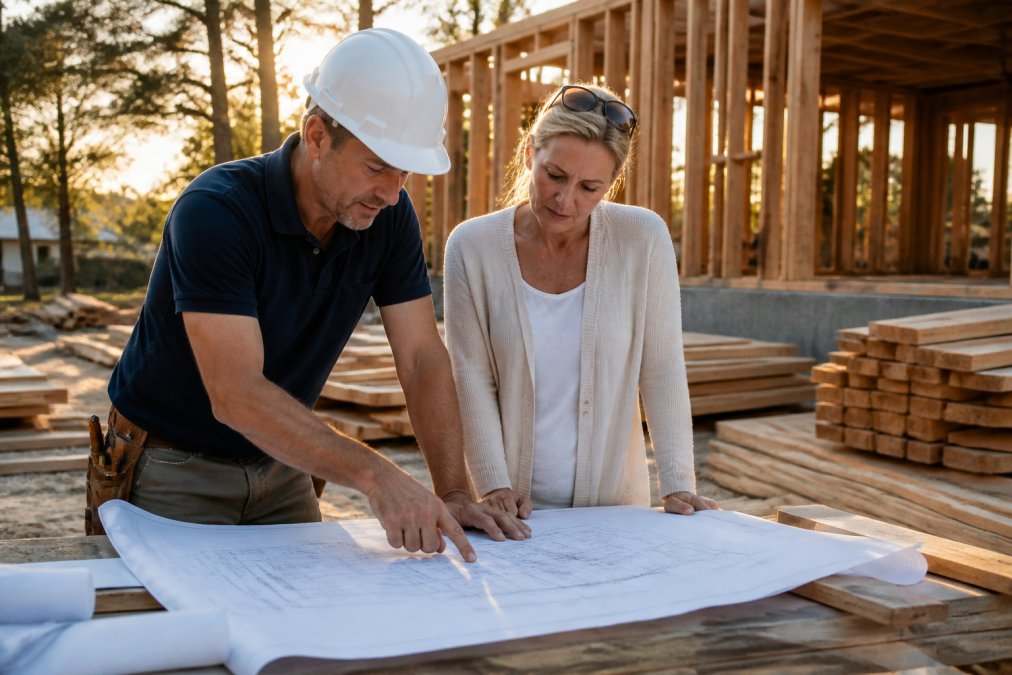
The appeal is control. The cost is that control is a full-time job.
Owner-Led Construction vs. Hiring a General Contractor
The core trade-off is straightforward: owner-led construction removes the general contractor markup but transfers project management, liability, and scheduling risk to the owner. A general contractor bundles those responsibilities into one fee; owner-led delivery unbundles them.
A general contractor typically charges a markup on labor and materials, plus a fee for oversight. That markup covers coordination, scheduling, subcontractor vetting, and warranty obligations. Remove the contractor, and those functions don't disappear. They land on you.
| Factor | Owner-Led | General Contractor |
|---|---|---|
| Cost structure | Materials at wholesale, no markup | Markup plus management fee |
| Control over finishes | Full | Shared with builder |
| Scheduling responsibility | Owner | Contractor |
| Subcontractor vetting | Owner | Contractor |
| Warranty and liability | Owner | Contractor |
| Time commitment | High | Low |
The Benefits of Hiring an Owner's Representative
An owner's representative is a construction professional hired to manage a project on the owner's behalf, handling scheduling, subcontractor coordination, and contract administration without the full markup of a general contractor. It is the middle path between total DIY oversight and handing the project to a builder.
The role is often confused with a construction manager. In practice, an owner's rep acts as the owner's advocate, reviewing pay applications, challenging change orders, and holding trades to the contract, while a construction manager typically runs the work itself. Some firms offer both under one roof; the distinction matters because you are buying advocacy in one case and execution in the other.
What an owner's rep actually does week to week:
- Reviews and approves subcontractor pay applications before the owner releases funds
- Walks the site to verify installed work matches the drawings and specs
- Tracks the schedule against the baseline and flags slippage early
- Administers the contract: RFIs, submittals, change order pricing, and closeout documents
- Coordinates inspections with the local building department and tracks the certificate of occupancy punch list
- Maintains the owner's budget log so overruns surface before they compound
How they are typically compensated. Most owner's reps bill either hourly, as a fixed monthly retainer, or as a percentage of hard construction cost. A common pattern is a monthly retainer during pre-construction that converts to a percentage-based fee once the build starts. That structure is usually still less than a general contractor's full markup because the rep is not carrying the trades' contracts or warranty obligations.
The benefits of hiring an owner's representative show up fastest on complex jobs: waterfront builds, high-rise condo remodels, and projects requiring HOA coordination. A representative speaks the trades' language, reads drawings, and catches scope gaps before they become change orders.
Where the model breaks down. An owner's rep has no contractual authority over the trades unless the owner delegates it in writing. If the rep cannot approve or reject work, subcontractors learn to route around them. The owner also retains ultimate liability for jobsite safety and code compliance, the rep manages the project, but does not absorb the legal exposure the way a general contractor would.
For owners who want the cost savings of direct procurement but not the daily grind, this is usually the right structure. You keep decision authority; someone qualified handles execution.
How Fixed-Price Construction Contracts Protect Your Budget
Fixed-price construction contracts lock the total project cost before work begins, shifting the risk of cost overruns from the owner to the contractor. That is the entire point: the number you sign is the number you pay, unless you change the scope.
This matters most for owners who have been burned by lowball bids that balloon through change orders. A fixed-price agreement removes that incentive. The contractor cannot nickel-and-dime you for costs they should have anticipated.
Where fixed-price contracts work best:
- Projects with complete, locked drawings and specifications
- Renovations where existing conditions have been assessed up front
- Builds where the owner commits to material selections early
Owner Builder Construction Management: Risks and Rewards
Owner builder construction management rewards owners who have time, construction literacy, and tolerance for risk. It punishes owners who have none of the three. The model is not inherently better or worse than hiring a builder; it suits a specific profile.
The rewards are real. Direct procurement, wholesale material costs, and full control over material selection and finish quality let owners shape the outcome in ways a standard builder relationship doesn't allow. Cash flow management also stays in the owner's hands, which can reduce financing costs on a construction loan.
The risks are equally real. Owner-builders absorb liability for jobsite safety, defective work, and code compliance. They also carry the scheduling burden when a subcontractor no-shows. Most owner-builder projects succeed or fail on the owner's ability to vet and manage subs, not on the construction itself.
Legal, Insurance, and Permitting Responsibilities You Cannot Ignore
Owner-builders take on legal, insurance, and permitting duties that a general contractor normally absorbs. This is the section most guides skip, and it is where owner-led projects most often go wrong.
Permitting. The step-by-step permitting process generally runs: confirm zoning compliance, submit construction drawings for plan review, pay permit fees, schedule inspections at each phase, and obtain a certificate of occupancy at completion.
Why Owner-Led Construction Delivers Better Timelines and Craftsmanship
Owner-led construction can deliver tighter timelines and higher finish quality, but only when the owner or their representative actively manages the schedule and quality control. The model itself doesn't guarantee either; oversight does. The mechanism is worth spelling out, because most guides stop at the claim.
- Verify state and local licensing for each trade before signing anything
- Request a certificate of insurance naming the owner as additional insured
- Ask for three recent references on comparable scopes, and actually call them
- Confirm the sub carries workers' compensation coverage, if they don't, the owner can inherit the liability for a jobsite injury
- Get a written scope of work with inclusions and exclusions spelled out, not a verbal bid
- Check lien rights: in most states, an unpaid sub can file a mechanic's lien against the property even if the owner already paid the general contractor or another party
Frequently Asked Questions
What does an owner's rep do in construction?
An owner's representative acts as your advocate throughout the project. They manage the construction budget, coordinate subcontractors, oversee quality control, and handle contract administration. In owner-led construction, this person ensures your interests come first, not the contractor's. They also manage procurement, review change orders, and keep the project on schedule. For waterfront or high-rise projects with strict HOAs, an owner's rep handles permitting and zoning compliance so you avoid costly delays.
How does owner-led construction differ from hiring a general contractor?
With a general contractor, you transfer most decision-making and risk to them, but you also pay a markup on every subcontractor and material. Owner-led construction keeps you in control: you hire trades directly, buy materials at wholesale costs, and manage the schedule. You also retain liability for safety and defects. The trade-off is more involvement versus lower costs and greater transparency. Many owners hire an owner's representative to handle daily oversight while keeping final say.
What are the financial advantages of managing a construction project directly?
Direct management eliminates the general contractor markup. You also control material selection and can negotiate wholesale prices. Cash flow management improves because you pay subcontractors directly as work completes, not through a middleman. Fixed-price contracts further protect you from surprise change orders. Always budget a contingency for unexpected site issues.
What risks should owners consider before choosing an owner-led approach?
Owner-led construction shifts legal and insurance liabilities to you. You become responsible for jobsite safety, workers' compensation, and defects. Permitting and building codes compliance also fall on you. Without experience, you may face delays from subcontractor no-shows or missed inspections. Vetting subcontractors thoroughly, carrying builder's risk insurance, and hiring an owner's representative can mitigate these risks. If you lack construction knowledge, a hybrid approach may be safer.