 How-to
How to Find Reliable Custom Builders
Last Updated: October 30, 2026
Quick Summary
To find reliable custom builders, build a shortlist from a local home builders association, referrals from people who have actually built, and online review sites, then verify each candidate against references, licensing records, and completed homes you can visit in person. A reliable builder is a licensed contractor with verifiable completed work, stable finances, and a communication style you can live with for 12 to 18 months.
- Custom building starts rose 3% year over year in the first quarter of 2026, reaching 36,000 nationwide.
- Ask each builder for three references from recently completed homes and call every one.
- Visit at least two finished projects, ideally built in the last three years, and inspect secondary spaces.
- Compare bids by normalizing scope, itemizing allowances, and listing exclusions in writing.
- A large upfront deposit before any work begins is the most common payment red flag.
Table of Contents
- Start With a Builder Shortlist: Associations, Referrals, and Reviews
- Custom Home Builder References and Reviews: How to Verify Both
- Check Experience, Portfolio, and Completed Homes in Person
- Questions to Ask a Custom Home Builder Before You Sign
- How to Compare Home Builder Estimates on Equal Terms
- Custom Home Builder Contract Checklist and Payment Red Flags
- Request a Free Quote From Accent Construction & Remodeling
- Frequently Asked Questions
Start With a Builder Shortlist: Associations, Referrals, and Reviews
Custom building starts rose 3% year over year in the first quarter of 2026, reaching 36,000 nationwide, according to Eye on Housing's custom home building analysis. That growth means more builders are competing for your project, and more noise to cut through. Learning how to find reliable custom builders starts with one rule: build a shortlist of reliable custom builders before you build a house. Too many homeowners sign with the first smooth talker they meet.
A reliable builder is a licensed contractor with verifiable completed work, stable finances, and a communication style you can live with for 12 to 18 months.
Where to Find Local Custom Home Builders
Start with three channels: a local home builders association, referrals from people who've actually built, and online review sites. The Association of Professional Builders' residential construction report, which benchmarks data from 8,462 builders, exists precisely because performance varies wildly across firms. Associations filter for licensed members. Referrals filter for real experience. Review sites filter for patterns.
Using a Home Builders Association and Real Estate Agent Referrals
A home builders association gives you a vetted starting pool, but membership isn't a quality guarantee. Treat it as a filter, not a verdict. Real estate agent referrals deserve the same skepticism. Some homeowners report that realtor-suggested builders can be expensive while missing quality expectations, according to homebuilding discussions on Reddit. Ask any referred builder one question: "Who else did you build for that I can call?" A referral with names attached is worth ten without.
Custom Home Builder References and Reviews: How to Verify Both
Custom home builder references and reviews work best when you verify both against each other. Online reviews show patterns; references show proof. A builder with 40 five-star reviews and no phone numbers to call is a red flag. So is a builder who can't name a single client from the past two years.
Use this verification sequence:
- Read the negative reviews first. Look for patterns: delays, change orders, communication breakdowns.
- Ask for three references from recently completed homes. Older references forget the pain.
- Call each reference and ask one question: "Would you build with them again, knowing what you know now?"
- Cross-check the builder's name against your state's licensing database and complaint history.
- Search Google, Houzz, and Yelp for the builder's business name plus the word "complaint."
Check Experience, Portfolio, and Completed Homes in Person
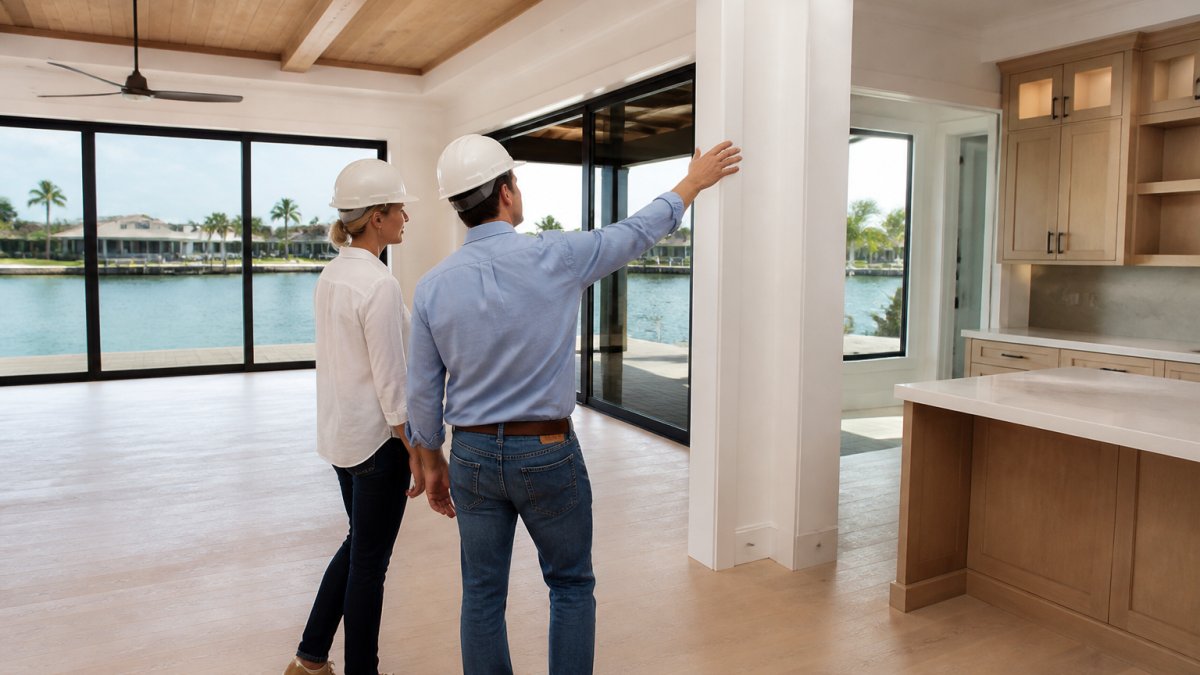
A portfolio is a marketing document. A completed home you can walk through is evidence. Ask to visit at least two finished projects, ideally ones built in the last three years.
But a walkthrough only counts if you use the same framework every time. Use this site-visit checklist on every home you tour: Systematic observation during these visits provides the necessary foundation for finding reliable contractors who prioritize structural integrity over superficial aesthetics.
- Workmanship in secondary spaces. Check closets, laundry rooms, garages, and mechanical rooms. Production-grade shortcuts show up there first, unpainted drywall edges, unsealed penetrations, sloppy trim returns.
- Schedule performance. Ask the current owner when the home was supposed to be finished versus when they moved in. A two-week slip is normal; a six-month slip with no written change orders is a pattern.
- Post-completion service. Ask what happened after the punch list. Did the builder return calls for warranty items? How fast? A builder who disappears after closing will disappear during the build, too.
- Change-order discipline. Ask the owner how change orders were priced and documented. Verbal approvals and lump-sum surprises are the most common source of post-build disputes.
- Subcontractor relationships. Ask the owner whether the same trades stayed on the job from framing to finish. High turnover mid-build usually signals scheduling or payment problems.
Then check fit and capacity, the part most selection guides skip. A builder who specializes in 4,000-square-foot production homes may not be the right match for a complex waterfront build.
Finally, verify the portfolio itself. Ask for the address or listing of each completed home and cross-check it against permit records with the local building department.
Questions to Ask a Custom Home Builder Before You Sign
The right questions separate operators from order-takers. Ask these before any contract discussion:
- Who supervises my job site daily, and will I meet them before signing?
- How many active projects will you be running while building mine?
- What's your process for change orders, and what triggers one?
- How do you handle delays, and are there penalties written into the contract?
- Can you provide proof of general liability insurance and workers' comp?
- What's your communication cadence: weekly calls, written updates, or a portal?
Listen for specifics. A builder who answers "we're flexible" to every question is telling you there's no system.
How to Compare Home Builder Estimates on Equal Terms
Bids only compare when they cover the same scope. A $50,000 gap between two estimates usually means one bid excluded site work, permits, or finishes, not that one builder is cheaper. Before comparing numbers, compare line items. Most homeowners compare the bottom line; reliable builders expect you to compare the assumptions behind it.
Use this apples-to-apples method on every bid you receive:
- Normalize the scope. Put every bid into the same categories: site work, foundation, framing, mechanicals, finishes, permits, and contingency. If a bid doesn't break out a category, ask for it in writing before you compare totals.
- Compare allowances line by line. An allowance is a placeholder dollar amount for a selection the builder hasn't priced yet, tile, lighting, plumbing fixtures, appliances. A bid with a $10,000 tile allowance and a bid with a $30,000 tile allowance are not the same bid. Ask for the dollar amount per category, not one lump "allowance" figure.
- List exclusions explicitly. Every bid excludes something. Common exclusions: site clearing, utility trenching, permits and impact fees, landscaping, window treatments, and owner-purchased materials. Write each exclusion next to the bid so you can see what you'll pay separately.
- Check the specification level. "Standard finishes" means nothing. Ask for the actual spec sheet: brand, model, and grade for windows, roofing, HVAC, and cabinetry. Two bids with the same total but different window grades are not comparable.
- Compare contract type and contingency. A fixed-price bid and a cost-plus bid carry different risk. Cost-plus should state a written cap and a contingency percentage; fixed-price should state what triggers a change order. Ask what contingency is built into the number and who keeps what's left unspent.
- Compare the change-order process. Ask how change orders are priced, markup percentage, hourly rates, or fixed fees, and whether written approval is required before work proceeds. A low bid with an expensive change-order process is often the most expensive bid.
- Compare the schedule. A bid without a written start date, milestone schedule, and completion date is not a complete bid. Ask whether delay penalties are included and at what daily amount.
| Comparison Point | What to Check | Red Flag |
|---|---|---|
| Scope of work | Same rooms, same finishes, same allowances | Vague descriptions like "standard finishes" |
| Contract type | Fixed-price vs. cost-plus | No stated cap on cost-plus |
| Allowances | Itemized dollar amounts per category | One lump "allowance" figure |
| Exclusions | Written list of what's not included | Verbal "we'll handle that" |
| Specifications | Brand, model, and grade per category | No spec sheet attached |
| Contingency | Stated percentage and who controls it | No contingency disclosed |
| Timeline | Start date, milestones, completion date | No written schedule |
| Payment schedule | Tied to milestones, not calendar dates | Large upfront deposit |
| Change order process | Written approval required | Verbal approvals accepted |
Custom Home Builder Contract Checklist and Payment Red Flags
A custom home builder contract checklist should confirm five things before you sign: scope, price, schedule, penalties, and payment terms. Anything missing is use you're handing over.
- Detailed scope of work attached as an exhibit
- Fixed price or cost-plus with a written cap
- Start date, milestone schedule, and completion date
- Delay penalties with a defined daily amount
- Payment tied to completed milestones, never to calendar dates
- Change orders require written approval from both parties
- Lien waivers required from subcontractors at each payment
- Warranty terms stated in writing
- Dispute resolution process defined
Watch out: A large upfront deposit before any work begins is the single most common payment red flag. Reputable builders bill against completed milestones.
Request a Free Quote From Accent Construction & Remodeling
Verifying a builder takes work, and most homeowners skip half of it. We built our process around the checks above. Accent Construction & Remodeling offers fixed-price contracts for most projects under $1.5 million. Founder John Pelland brings 35+ years of trade experience and stays directly involved in owner-led project management. Accent also offers an on-time completion guarantee with self-imposed penalties.
Ready to move from shortlist to shovels? Explore our custom home building services to learn how we handle custom builds. Browse our project gallery to see completed custom and waterfront projects. Then request a free quote about your project.
Frequently Asked Questions
What questions should I ask a custom home builder before hiring?
Ask who will actually run your job site day to day, how many projects the builder has active at once, and which parts of the work are subcontracted. Request the license number and certificate of insurance, then verify both with the issuing authority. Ask how change orders are priced and approved in writing. Finally, ask for three past clients from the last two years and call them. Answers you can check beat answers that sound good.
How do I compare estimates from custom home builders fairly?
Line up every bid against the same scope document so allowances, exclusions, and finish levels match. A lower number usually means something was left out, not that the builder is cheaper. Ask each builder to state what is excluded, how long the price holds, and whether the contract is fixed-price or cost-plus. Compare total cost, schedule, and payment terms side by side rather than the headline figure alone.
What should a custom home building contract include?
A solid contract names the scope, the drawings it is based on, the price or cost-plus formula, the payment schedule tied to completed milestones, and the completion date with consequences for missing it. It should spell out the change order process, warranty terms, lien waivers from subcontractors, and who holds permits. Read the dispute resolution clause before signing, and never pay a large deposit before the contract is executed.
What are red flags when hiring a home builder?
Watch for large upfront deposits, pressure to sign quickly, no verifiable license or insurance, and vague scopes that leave room for change orders. A builder who cannot name recent local projects or provide past client contacts is a risk. So is one who quotes far below every other bid without explaining why. Ask for lien waivers and written change orders on every job; refusal to provide either is a warning sign worth taking seriously.
The difference between a smooth build and a nightmare usually comes down to the diligence you do before signing. Get started with Accent Construction & Remodeling and build on a fixed price, a written schedule, and an owner who shows up.