 ultimate-guide
How to Budget for a Luxury Renovation in 2026
Table of Contents
- Luxury Home Renovation Cost Breakdown: What Drives the Numbers
- Budget Allocation by Category: Where the Money Goes
- How to Manage Renovation Contingency Funds
- The Benefits of Fixed-Price Construction Contracts
- Financing a Luxury Renovation: Loans, Equity, and Tax Angles
- Sustainable Luxury: Energy-Efficient Upgrades That Pay Back
- Planning and Design Phase: Setting the Budget Before Demolition
- Conclusion: Building Your Budget with Confidence
- Frequently Asked Questions
Last Updated: October 2, 2026
Luxury Home Renovation Cost Breakdown: What Drives the Numbers
Learning how to budget for luxury renovation starts with understanding that cost is not a single line item, it is a stack of decisions. In this guide, Accent Construction & Remodeling breaks down where the money actually goes, why two homes of identical square footage can land millions apart, and how to plan a luxury renovation without discovering mid-project that the budget was fiction. The single biggest driver is scope, not square footage. A waterfront custom remodel with structural changes and bespoke materials costs far more per foot than a cosmetic refresh of the same rooms.
Cost per Square Foot and Premium Finishes
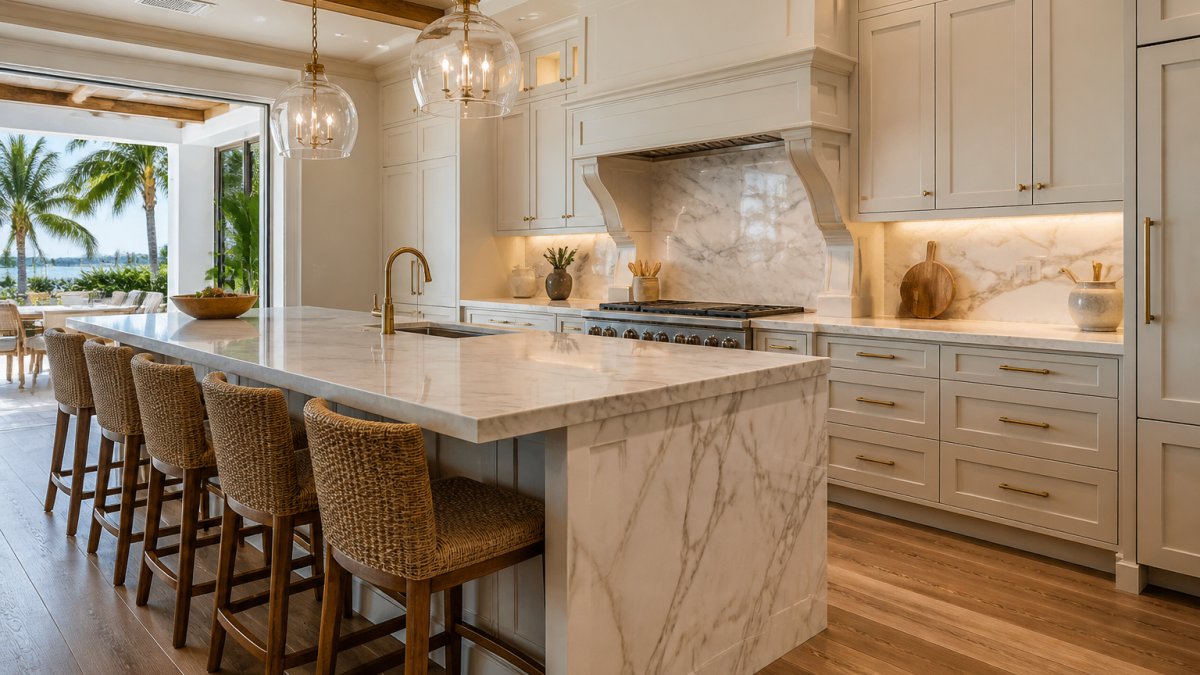
Cost per square foot is the fastest way to sanity-check a budget, but it is also the most abused number in the industry. A kitchen with high-end finishes and imported stone can run several times the per-foot rate of a standard kitchen. Premium finishes, custom cabinetry, and stone slabs drive that gap.
Labor, Materials, and Architectural Fees
Labor and material costs move with the local labor market and procurement strategy. Architectural fees, permitting costs, and interior design sit on top of construction. A common mistake is budgeting for materials and forgetting that architectural fees and permitting are separate line items.
Budget Allocation by Category: Where the Money Goes
Budget allocation by category is the step most homeowners skip, and it is the one that prevents mid-project panic. A workable split for a high-end custom remodel looks roughly like this:
| Category | Typical Share | Notes |
|---|---|---|
| Construction and labor | Largest share | Framing, trades, project management |
| Materials and premium finishes | Second largest | Stone, cabinetry, fixtures |
| Design and architectural fees | Smaller share | Plans, 3D design, engineering |
| Permitting and inspections | Fixed costs | Varies by jurisdiction |
| Contingency fund | 10-20% | Non-negotiable reserve |
How to Manage Renovation Contingency Funds
Managing renovation contingency funds is what separates a finished project from a stalled one. Set aside 10-20% of the total budget as a reserve, and treat it as untouchable. Unexpected costs are normal in high-end work: hidden water damage, structural surprises, or a material that arrives damaged. A contingency fund absorbs those without derailing the renovation timeline.
The Benefits of Fixed-Price Construction Contracts
The benefits of fixed-price construction contracts come down to one thing: certainty. Under a fixed-price agreement, the builder commits to a number for a defined project scope, so the risk of cost overruns sits with the contractor, not the homeowner. This is the opposite of time and materials billing, where every surprise lands on your invoice. Fixed-price works best when the scope is fully documented and the finish schedule is locked before construction starts.
Financing a Luxury Renovation: Loans, Equity, and Tax Angles
Financing a luxury renovation is not a single decision, it is a structure. Most high-net-worth owners pull from three sources, and the right mix depends on how long you plan to hold the property, how much equity you have, and whether you want the renovation to show up on a mortgage application or stay off it.
Home equity. A home equity line of credit (HELOC) or a fixed-rate home equity loan lets you borrow against appreciation without liquidating investments. HELOCs are variable-rate and draw-period based, which suits phased projects; fixed-rate home equity loans suit owners who want a locked payment. Lenders typically cap total borrowing against a home at a combined loan-to-value (CLTV) ratio, so a large existing first mortgage reduces how much equity you can tap.
Cash-out refinancing. A cash-out refinance replaces your existing mortgage with a larger one and hands you the difference in cash. It works best when current rates are at or below your existing rate and you want one payment instead of two. The trade-off is that you reset your amortization schedule and pay closing costs again.
Construction loans. For ground-up or gut renovations, a construction loan funds in draws tied to completed milestones, and the lender inspects before each disbursement. Construction loans typically carry higher rates than permanent mortgages and convert to permanent financing at completion. They are the right tool when the scope is large enough that a HELOC cannot cover it.
Cash. Paying cash avoids interest and origination costs and simplifies the contractor relationship, but it ties up capital that could otherwise stay invested. For owners with concentrated positions, the comparison is not cash versus loan, it is cash versus the after-tax return on the assets you would liquidate.
Tax treatment. The IRS guidance on capital improvements explains that a capital improvement, a permanent structural change or restoration that adds value, prolongs life, or adapts the property to a new use, can be added to your home's cost basis. That matters at sale: a higher basis means a smaller taxable gain. Repairs that merely maintain the home are generally not added to basis.
A practical sequence. Most owners start with a HELOC for flexibility, layer a construction loan for the structural phase, and refinance into a permanent mortgage at completion. Decide the sequence before demolition, because switching financing mid-project is expensive.
Sustainable Luxury: Energy-Efficient Upgrades That Pay Back
Upgrades that tend to pay back.
- Building envelope first. Air sealing, upgraded insulation, and high-performance windows reduce heating and cooling loads before any equipment is sized. Envelope work is unglamorous and rarely photographed, but it lowers the load every downstream system has to meet, which lets you buy a smaller HVAC system.
- Right-sized HVAC. A high-efficiency variable-speed system paired with a properly sealed envelope often costs less to run than a larger standard system in a leaky house. Manual J load calculations are the mechanism, insist on them rather than letting a contractor size by square footage.
- Water heating. Heat pump water heaters carry a higher upfront cost than gas tank units but cut water-heating energy use substantially in most households.
- Lighting and controls. LED fixtures and occupancy or daylight controls are inexpensive relative to a luxury finish schedule and cut plug and lighting load.
Budget line. Carve sustainable upgrades into their own category rather than burying them in construction. Owners who track them separately can see which ones actually returned their cost and which ones were lifestyle spending, which makes the next renovation's budget sharper.
Planning and Design Phase: Setting the Budget Before Demolition
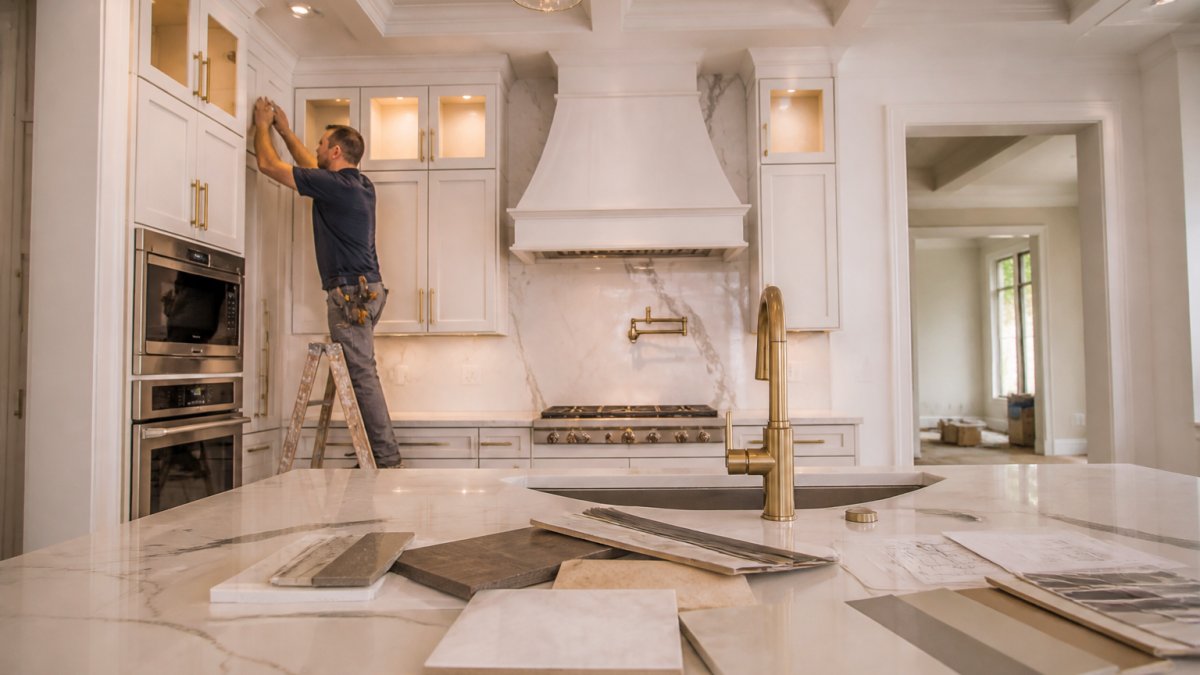
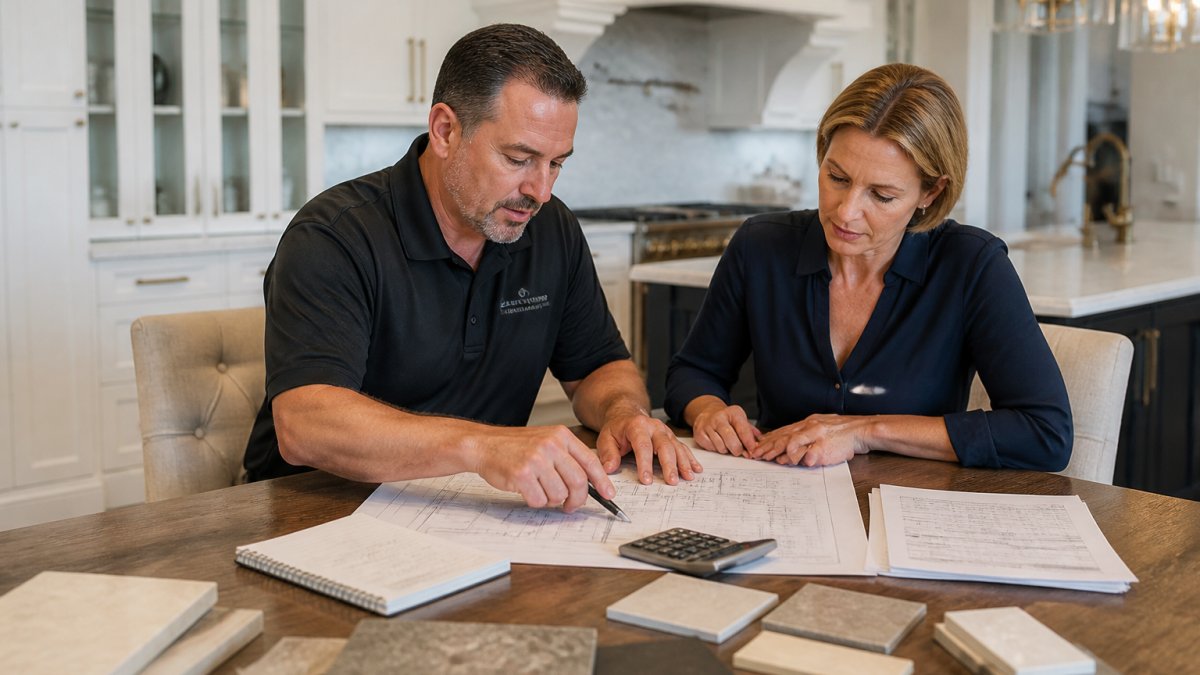
The planning and design phase is where a luxury renovation budget is actually set, long before demolition. A design-build approach keeps design and construction under one roof, which reduces the gap between what is drawn and what is built. Use 3D design planning to see the finished space before work begins. This is also the stage to coordinate HOA requirements for high-rise and condo projects, since approval timelines affect the renovation timeline.
Conclusion: Building Your Budget with Confidence
The real challenge in a luxury renovation is not the number, it is the uncertainty around it. Accent Construction & Remodeling removes that uncertainty with fixed-price contracts, owner-led craftsmanship, and 3D design planning so you see the result before demolition. For waterfront homes, high-rise condos, and high-end kitchens and baths, get a free quote and build your budget with confidence.
Frequently Asked Questions
What percentage of home value should be spent on a luxury renovation?
A common guideline is to keep renovation costs between 10% and 25% of your home's current market value, depending on the scope and your long-term plans. For high-end custom remodels, some homeowners invest up to 30% if the upgrades align with neighborhood standards and personal enjoyment. Exceeding 30% can price your home above comparable sales, making it harder to recoup costs at resale. Always weigh renovation ROI against your timeline and how much you value living in the finished space.
How do you account for unexpected costs in a luxury remodel?
Set aside a contingency fund of 15% to 20% of your total project budget. This covers hidden issues like structural repairs, permit delays, or material price increases. With a fixed-price contract, your builder absorbs many unforeseen costs, but a contingency still protects you if you request changes mid-project. Keep the fund in a separate savings account and only tap it for genuine surprises, not upgrades. Review your contingency balance monthly with your contractor to stay on track.
What is the difference between a standard and a luxury renovation budget?
Standard renovations focus on functionality and mid-range materials, with budgets often under $100 per square foot. Luxury renovations use bespoke materials, custom cabinetry, high-end appliances, and specialized labor, pushing costs to $300 per square foot or more. Luxury projects also include architectural fees, design-build coordination, and premium finishes that require longer lead times. The budget must account for these higher unit costs, extended timelines, and a larger contingency for custom work.
How does a fixed-price contract protect a luxury renovation budget?
A fixed-price contract locks in the total cost for a defined scope of work, so you avoid surprise change orders. The builder assumes responsibility for most cost overruns, giving you predictable payments. This works best when the design is fully specified before signing, with allowances for selections like tile or fixtures. If you request changes, they are priced separately. For projects under $1.5 million, fixed-price contracts offer strong budget protection and peace of mind.
This article is for general informational purposes. Consult a licensed tax professional regarding your specific situation.