 blog
How to Compare BCB Homes and PBS Contractors Before You Build
Last Updated: November 8, 2026
Quick Summary
The article does not rank BCB Homes against PBS Contractors, because no independent satisfaction data exists for BCB Homes to compare. Its bcb homes vs pbs guide instead gives a checklist for verifying licenses, insurance, warranties, estimates and references before you sign.
- PBS Contractors reports a 97% recommendation rate, tied to its 2026 Guildmaster award, but no comparable figure was found for BCB Homes.
- Verify each company's contracting license on the state's public lookup and confirm its scope covers your work.
- Request a current certificate of insurance and confirm its policy dates run through your construction window.
- Compare estimates line by line, checking for site preparation, permits, finishes and exclusions.
- Ask for references from completed projects similar to yours and visit a finished job if possible.
Table of Contents
- What the BCB Homes vs PBS Contractors Comparison Can and Cannot Tell You
- Home Builder vs General Contractor: Which Role Fits Your Project
- Verifying Licensing, Insurance and Warranty Before You Sign
- Comparing Custom Home Construction Estimates Side by Side
- Pricing Structure, Change Orders and Timeline Commitments
- What Independent Feedback and Completed Projects Show
- How to Shortlist Custom Home Builders for Your Project
- Booking Your Consultation and Requesting a Written Estimate
- Frequently Asked Questions
Choosing between two builders is hard when the sales pages all sound the same, so this bcb homes vs pbs guide is built to help you cut through that noise. A comparison article has to separate what you can verify from what you are simply told. This guide from Accent Construction & Remodeling walks through the questions that matter before you commit a seven-figure budget.
One limit comes first. The research available for this comparison is thin. PBS Contractors reports a 97% recommendation rate in its 2026 Guildmaster award announcement, and a Qualified Remodeler listing shows the same 97% figure alongside 20 completed jobs PBS Contractors 2026 Guildmaster award announcement. We found no comparable, independent figure for BCB Homes, so we cannot rank the two on satisfaction. Treat any side-by-side verdict as a checklist, not a scorecard.
What the BCB Homes vs PBS Contractors Comparison Can and Cannot Tell You
A fair comparison starts with the questions you can actually answer. Company-reported awards and listings show how each builder presents itself. They do not show how a project will go on your lot.
Use the comparison to answer these questions:
- Which company's project size and type fit your plans?
- What does each contract say about price, change orders and timelines?
- Can you verify each company's license and insurance yourself?
Use other evidence for the rest. Ask for references from completed projects similar to yours, and visit a finished job if you can.
Home Builder vs General Contractor: Which Role Fits Your Project
The label on a company matters less than the role it will play on your project. A home builder usually designs and constructs a new house, often from its own plans or a set of standard options. A general contractor manages subcontractors and construction on a project you may have designed with an architect. Some firms do both.
Ask each company directly whether it will act as builder, general contractor or both, and who will hold the construction contract. A custom waterfront home with complex site work calls for a firm with clear project management responsibility, whatever it calls itself.
Verifying Licensing, Insurance and Warranty Before You Sign
Most comparison articles stop at "check the license." That advice is useless unless you know what to check, where to check it, and what a clean result actually looks like for each company. This section turns verification into a side-by-side worksheet you can complete in about an hour before you sign anything with BCB Homes or PBS Contractors.
License verification
Check each company's contracting license on the state's public lookup before you sign. Confirm the license is current and active and that its authorized scope covers the work in your contract.
Insurance certificates
Request a current certificate of insurance from each company and read it rather than filing it. Confirm the policy dates run through your expected construction window, not just the signing date.
Warranty terms
Ask each company for its written warranty document, not a summary, and compare the length of structural and workmanship coverage, the claim process, and the response obligation once a claim is filed.
What to put in the contract
Verification only protects you if the contract reflects it. Ask for the license number, insurance certificate, and warranty document to be attached as exhibits to the agreement, and confirm the contract names the legal entity that holds the license. If the sales contact and the contracting entity are different companies, ask why in writing.
The comparison worksheet
Build a simple table with one row per item and one column per company, covering license status, insurance, warranty terms and contract exhibits. A company that cannot fill every row is not necessarily disqualified, but every blank is a question you should resolve before signing.
The worksheet below sets out the verification items for each company, so you can check them side by side before you sign.
| Item | What to check | Where to check it |
|---|---|---|
| License | Current, active, scope covers the work | State public license lookup |
| Insurance | Certificate dates run through construction window | Current certificate of insurance |
| Warranty | Structural and workmanship coverage length | Written warranty document |
| Contract exhibits | License, insurance and warranty attached | Signed agreement |
Comparing Custom Home Construction Estimates Side by Side
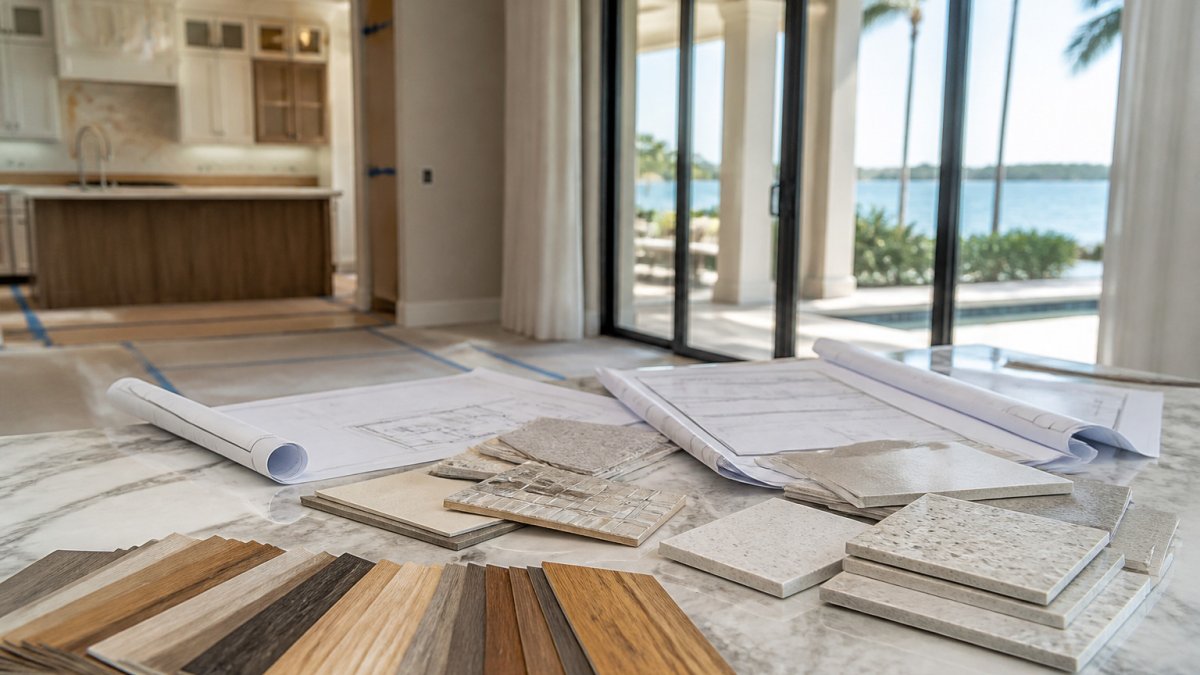
An estimate is only useful if it describes the same work as the others. When you collect bids for a custom home, compare line items instead of totals. Check whether each bid includes site preparation, permits, finishes, fixtures, landscaping and allowances, and note any exclusions.

A low number often means something is missing from the scope. Ask each builder to explain the largest differences in writing. Estimates built from the same drawings and specifications make a far more reliable comparison than estimates built from different assumptions.
Pricing Structure, Change Orders and Timeline Commitments
Pricing structure shapes your risk. A fixed-price contract places more of the cost risk on the builder, while cost-plus arrangements pass more of it to you. Compare the two structures side by side in our fixed price vs cost plus remodeling comparison. Neither is automatically better, but you should know which one you are signing and what triggers a change order.
Ask each company how change orders are priced and approved, and whether it commits to a completion date. Look for specific language about delay consequences. Our penalty clauses for construction delays guide explains how that language usually works. Compare the terms side by side rather than relying on verbal promises. If a company cannot put a timeline commitment in writing, that tells you something about how it will handle schedule pressure.
What Independent Feedback and Completed Projects Show
The hardest part of comparing BCB Homes and PBS Contractors is that most of what you will read about either company was published by the company. This section separates what can be independently verified from what is marketing, and then gives you a decision framework by project type so the evidence actually informs your shortlist.
What is verifiable, and what is not
Start with the numbers each company publishes and trace them to a source. PBS Contractors reports a 97% recommendation rate in its 2026 Guildmaster award announcement, and a Qualified Remodeler listing shows the same 97% figure alongside 20 completed jobs PBS Contractors 2026 Guildmaster award announcement. That figure is company-reported and tied to a specific award program, so treat it as a signal of customer satisfaction within that program rather than a market-wide ranking.
Awards and listings are useful for confirming that a company completes projects and participates in industry programs. They are not useful for predicting how your project will go. The evidence that predicts project outcomes is narrower: references from completed projects similar to yours, a walkthrough of finished work, and patterns in reviews the company does not control. Because references from comparable projects offer the clearest evidence of how a builder works, a checklist for checking references can help keep those conversations focused on the details that matter.
Reading reviews for patterns, not scores
Search for reviews on platforms the company does not own, and read the negative ones first. A single bad review is noise; the same complaint appearing across multiple reviews is a pattern. Common patterns to look for include communication gaps during the finishing phase, change orders that arrived later than expected, and punch-list items that took longer to close than the contract stated. Note whether the company responded to negative reviews and how, because that response style often mirrors how the company handles disputes.
References and walkthroughs
Ask each company for references from completed projects of similar size and type, and call them with specific questions. Ask how the final cost compared to the original estimate, how change orders were priced, how often the builder communicated, and what happened when a problem came up. Then visit a finished project if the owner allows it. Photographs are selected and edited; a walkthrough shows trim alignment, finish quality, and how the home has held up. You can browse completed projects to see finished kitchens, bathrooms and outdoor spaces before you visit.
Decision framework by project type
The right contractor depends on the project, not on a single reputation score. Decide who to interview first based on the project type you are planning.
- Custom home on a waterfront or complex lot: prioritize the firm with documented experience in site work, permitting, and project management responsibility for that lot type. Ask who holds the construction contract and who manages the site daily.
- Whole-home renovation or addition: prioritize workmanship warranty terms and references from occupied-home renovations, where dust control, scheduling, and communication matter as much as finish quality.
- Condominium renovation: prioritize experience with HOA approval processes, building access rules, and insurance requirements specific to shared structures. A luxury custom home builder may not be the right fit here.
- Commercial build-out: prioritize documented commercial project experience and the license scope that covers commercial work, which is not automatic for a residential builder.
What to do with the evidence
Score each company on the worksheet from the verification section, then add a second column for evidence: number of similar references reached, walkthrough completed, review patterns noted, and project-type fit. A company that scores well on licensing but cannot produce a similar reference is a different risk than one with a strong reference and a thin warranty. The goal is not to crown a winner but to know which questions remain open before you commit a seven-figure budget.
How to Shortlist Custom Home Builders for Your Project
Start with three to five firms, then narrow the list using the criteria above. Drop any company whose license you cannot verify or whose insurance certificate does not cover your property. Next, compare the contracts, estimates and references for the remaining firms.
Build your shortlist around fit rather than reputation alone. A builder with a strong track record on luxury waterfront homes may not suit a condo renovation that requires HOA approval, and the reverse is also true.
Booking Your Consultation and Requesting a Written Estimate
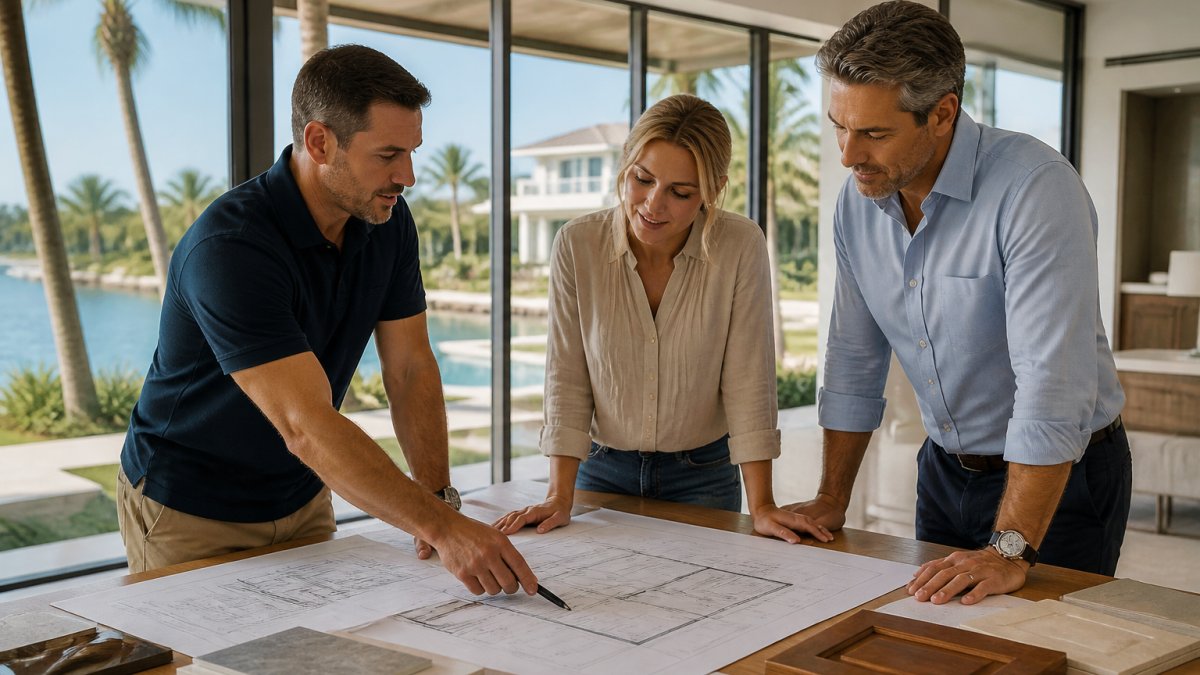
When you are ready to compare firms directly, book a consultation and request a written estimate. Bring your plans, your budget range and a list of questions from this guide. You can request a written estimate for your project at book a free consultation. Ask every builder on your shortlist for the same written scope so your comparison stays fair.
Last Updated: November 8, 2026
Frequently Asked Questions
What services does PBS Contractors offer?
The supplied research does not include a verified service list for PBS Contractors, so this article does not confirm which project types it takes on. Check the company's current website and ask for a written scope of services before comparing it with other builders. Confirm whether it handles custom homes, remodels, condo work or commercial build-outs, and ask for examples of projects similar to yours.
Does PBS Contractors build custom homes?
The research available for this comparison does not confirm whether PBS Contractors builds custom homes from the ground up. Its 2026 award and customer-satisfaction listings report a 97% recommendation rate, but they do not describe project types. Ask for a list of completed custom projects, their sizes and locations, and references from owners whose homes resemble yours.
How do I verify a contractor's license and qualifications?
Look up the contractor's license number on the state licensing board's public search before you sign anything, and confirm the license is active and covers the work you need. Request current certificates of general liability and workers' compensation insurance, and ask for a written warranty. Keep copies of everything in your project file.
What should I compare when choosing a custom home builder?
Compare licensing status, insurance, the contract structure, how change orders are priced, the proposed schedule, and how the builder communicates during construction. Ask who will manage the job day to day and whether the owner is involved. Compare written estimates line by line so that the scope and allowances match.